测试2222
The evolution of BMS technology
If you’re working with lithium‑ion batteries today—EVs, energy storage, industrial equipment—you’re really buying into the quality of the Battery Management System (BMS). The cells matter, but the BMS decides how safely, efficiently, and profitably those cells are used.
BMS history and development milestones
Early BMS designs were simple protection boards:
Basic over‑voltage / under‑voltage cut‑off
Over‑current and short‑circuit protection
Minimal temperature sensing, often just 1–2 NTCs
Key milestones came as pack sizes and voltages increased:
First generation lithium‑ion BMS for laptops and tools (low voltage, few cells)
Automotive‑grade BMS for HEV/EV, introducing multi‑cell monitoring ICs and functional safety
High‑voltage BMS for grid and commercial ESS, with stackable, modular architectures
Cloud‑connected BMS adding data logging, remote diagnostics, and fleet analytics
Each step was driven by higher energy density, stricter safety expectations, and tighter automotive battery safety standards.
From basic protection to intelligent, connected BMS
Modern systems have moved far beyond “don’t let the pack explode.” Today’s intelligent, connected BMS provides:
Real‑time monitoring of cell voltage, temperature, current, and insulation resistance
Advanced cell balancing systems (passive and active) to keep packs tightly matched
State‑of‑charge (SoC) and state‑of‑health (SoH) estimation algorithms to predict usable energy and remaining life
AI‑powered battery monitoring and AI‑based fault detection in batteries for early anomaly detection
Connectivity via CAN, Ethernet, 4G/5G to link the pack to vehicles, EMS, or cloud platforms
This is what enables smart battery monitoring systems, predictive maintenance, and fleet‑level optimization.
Key features in modern BMS (monitoring, protection, analytics)
A cutting‑edge lithium‑ion BMS today typically includes:
Monitoring
High‑accuracy voltage sensing per cell
Multi‑point temperature monitoring for cells and thermal management in batteries
Current measurement for precise energy tracking
Protection
Over/under‑voltage, over‑current, short‑circuit, over‑temperature, and under‑temperature protection
Scalable battery protection units that can handle from small packs to grid‑scale energy storage BMS
Isolation checks and contactor control for safe connect/disconnect
Analytics
SoC, SoH, and state‑of‑power (SoP) estimation
Degradation and cycle‑life modeling for battery lifecycle optimization
Usage profiling for warranty, residual value, and second‑life decisions
These are the building blocks of next‑gen EV power management and sustainable BMS for renewables.
Regulations and standards driving BMS innovation
BMS technology is evolving under pressure from global safety and compliance rules. The most impactful include:
ISO 26262 – Functional safety for automotive, critical for EV battery safety systems
UNECE R100, R136, R10 – EV safety and EMC requirements
UL 1973, UL 2580, UL 9540/9540A – Energy storage and EV battery system safety
IEC 62619, IEC 62133 – Industrial and portable lithium‑ion battery standards
To win global programs, a BMS must be ISO 26262 compliant, meet regional homologation needs, and support OEM‑level cybersecurity and diagnostics. Regulations are also pushing wireless BMS technology, better diagnostics, and more robust EV battery management solutions.
How advanced BMS cuts lifecycle and operating costs
A modern, high‑performance BMS is not just a safety component—it’s a profit lever:
Longer battery life
Accurate SoC/SoH prevents over‑stress, deep cycling, and overheating
Optimized thermal management in batteries reduces degradation
Better balancing extends usable life across all cells
Higher availability and less downtime
Early fault detection avoids catastrophic failures
Remote diagnostics and updates reduce field service trips
Lower energy and maintenance costs
Higher round‑trip efficiency in energy storage BMS solutions
Smarter charge/discharge control lowers demand charges and enhances total cost of ownership
Better residual value and second life
Trusted data history supports repurposing packs for BMS for residential energy storage or commercial ESS
Predictable performance improves ROI for fleet and grid investors
In short, choosing advanced top BMS companies and high‑voltage BMS manufacturers isn’t a nice‑to‑have—it’s how you protect assets, hit your KPIs, and stay competitive in EV, ESS, and industrial markets.
Top 10 BMS manufacturers with cutting‑edge technology in 2026
Below is a quick snapshot of the top 10 BMS manufacturers pushing battery management system innovations in 2026. I’m focusing on what each does best so you can quickly match them to your EV, ESS, or industrial project.
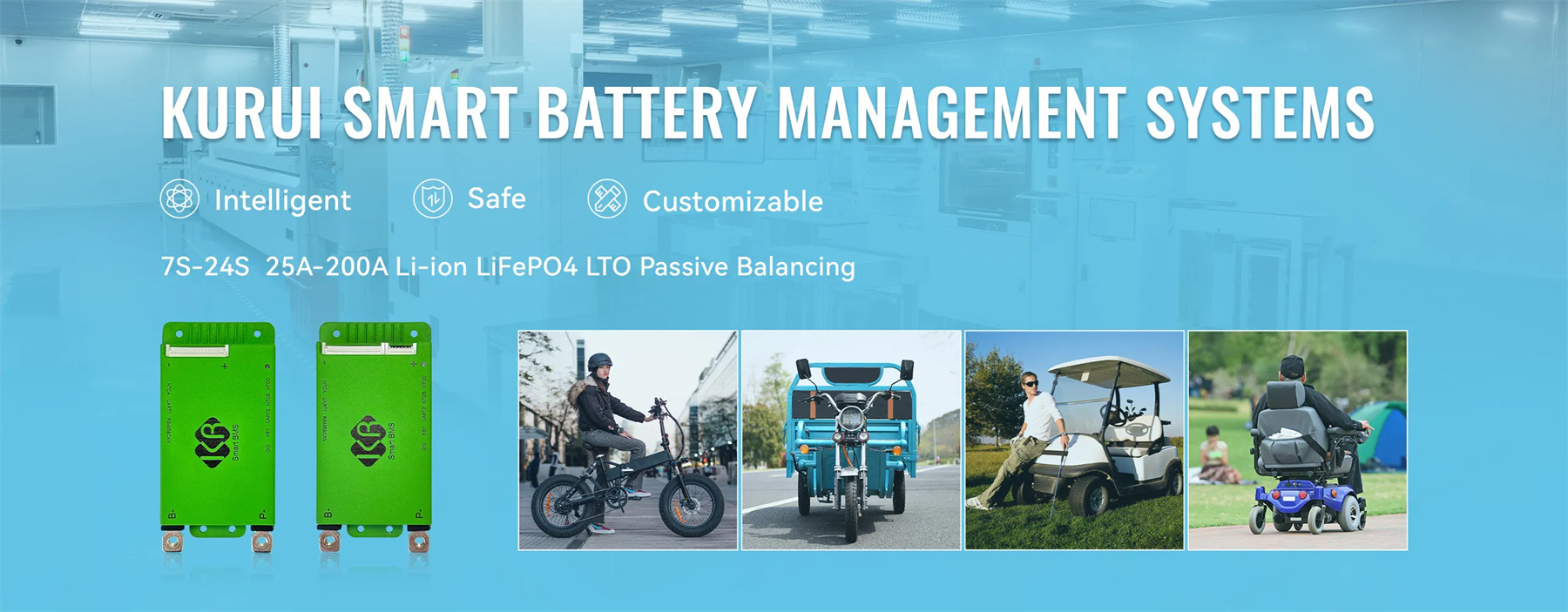
1. KuRui BMS – modular, AI‑enhanced BMS for EV and energy storage
I position KuRui BMS as a flexible, cost‑effective platform for global customers who need reliable performance without overpaying.
Key strengths:
Modular architecture: stackable boards for low‑voltage scooters, e‑bikes, all the way up to high‑voltage ESS.
AI‑powered monitoring: smart algorithms for SoC/SoH, cell balancing, and AI‑based fault detection in batteries.
Strong fit for:
Small to mid‑size EVs and light mobility
Residential and commercial ESS
OEMs needing custom packs and faster time to market
If you’re exploring AI features, our breakdown of the top AI algorithms used in smart BMS systems at KuRui is a good starting point: AI algorithms in smart BMS.
2. CATL – cell‑to‑pack BMS for high‑density EV batteries
Positioning:
Global leader in EV battery tech, tightly integrating cell‑to‑pack (CTP) designs with high‑performance BMS.
Highlights:
Optimized for high‑energy‑density EV packs
Deep integration with EV powertrain electronics
Strong OEM partnerships with major automakers
Best if you’re working on mass‑market EVs with very high volume and strict cost per kWh.
3. LG Energy Solution – integrated BMS for HEV, PHEV and ESS
Positioning:
Tier‑1 supplier blending lithium‑ion BMS technology across hybrid, plug‑in hybrid, and stationary storage.
Highlights:
Proven automotive battery safety standards compliance
Strong in HEV/PHEV packs and grid‑scale energy storage BMS
Good long‑term reliability data with OEMs
Ideal for automotive platforms that need global support and extensive field history.
4. Ewert Energy Systems – customizable high‑voltage BMS
Positioning:
Niche but powerful player in custom high‑voltage BMS for marine, industrial, and specialty EV.
Highlights:
High configurability for unique pack voltages and chemistries
Focus on industrial BMS and marine applications
Solid tools for pack design and integration
Good for one‑off or low‑volume projects that need custom limits and controls.
5. Nuvation Energy – scalable BMS for large ESS
Positioning:
Specialist in modular BMS designs for utility‑scale and commercial energy storage.
Highlights:
Highly scalable architecture from cabinets to containers
Strong communications and control for grid‑connected BMS
Designed for long‑life ESS, battery lifecycle optimization, and uptime
Best fit for large energy storage projects where monitoring, remote control, and safety are critical.
6. Infineon Technologies – BMS ICs and semiconductors
Positioning:
Core technology supplier for BMS ICs, power devices, and sensors.
Highlights:
High‑reliability ICs for smart battery monitoring systems
Building blocks for ISO 26262‑compliant BMS designs
Strong ecosystem for automotive and industrial
Good if you’re designing your own BMS hardware from scratch.
7. Texas Instruments – high‑accuracy analog front‑end
Positioning:
Reference standard for high‑accuracy BMS analog front‑end (AFE) and measurement.
Highlights:
Very accurate voltage and temperature sensing
Widely used in EV, ESS, and portable packs
Robust reference designs and documentation
Ideal when you need precision state‑of‑charge estimation and robust safety margins.
8. Panasonic – integrated BMS for cylindrical packs and EVs
Positioning:
Battery giant with strong integrated BMS for cylindrical cell packs and EV modules.
Highlights:
Deep know‑how with 2170/18650 packs
Good thermal management in batteries
Proven in high‑performance EV programs
Best for EV and power tool packs built around Panasonic cells.
9. STMicroelectronics – MCU‑based and edge‑AI BMS architectures
Positioning:
MCU and analog supplier enabling edge‑AI BMS architectures.
Highlights:
Flexible microcontroller platforms for BMS logic
On‑device analytics for battery health monitoring
Strong support for functional safety and connectivity
Good if you need smart, connected BMS with custom firmware.
10. AVL – simulation‑driven BMS and functional safety
Positioning:
Engineering powerhouse offering simulation‑driven BMS development and validation.
Highlights:
Advanced BMS and powertrain simulation tools
Strong focus on ISO 26262 and safety concept validation
Consultancy and platforms for OEM‑grade systems
Ideal for automotive and heavy‑duty OEMs that need full BMS development support.
Comparison table: key innovations, applications, market position
| Manufacturer | Key Innovation Focus | Main Applications | Market Position (2026) |
|---|---|---|---|
| KuRui BMS | Modular, AI‑enhanced BMS, flexible architectures | EV, light EV, residential/commercial ESS | Fast‑growing, cost‑effective innovator |
| CATL | Cell‑to‑pack, high‑density integration | Mass‑market EV, buses, commercial vehicles | Global EV battery leader |
| LG Energy Solution | Integrated BMS for HEV/PHEV/ESS | HEV, PHEV, grid and commercial ESS | Top‑tier automotive & ESS supplier |
| Ewert Energy | Custom high‑voltage BMS | Marine, industrial, specialty EV | Niche customization expert |
| Nuvation Energy | Scalable platforms for large ESS | Utility‑scale and C&I ESS | ESS specialist |
| Infineon | BMS ICs, power semiconductors | Automotive, industrial, custom BMS designs | Core component supplier |
| Texas Instruments | High‑accuracy AFE and reference designs | EV, ESS, industrial packs | Benchmark for analog accuracy |
| Panasonic | Integrated BMS for cylindrical packs | EV, power tools, energy storage modules | Strong cell and pack integrator |
| STMicroelectronics | MCU‑based, edge‑AI BMS architectures | Smart BMS, connected EV/ESS systems | Flexible silicon platform provider |
| AVL | Simulation‑driven BMS and safety platforms | Automotive OEMs, heavy‑duty, R&D | High‑end engineering partner |
For smaller EVs and light mobility, pay attention to installation and configuration details; we cover common pitfalls in our guide on installation mistakes with 36V/48V scooter BMS, which applies broadly to many compact packs.
How TOP10 BMS manufacturers with cutting‑edge technology compare in real‑world use

When I look at the top BMS players in 2026, I compare them on what actually matters in the field: uptime, safety, and cost over the full battery lifecycle. Marketing is one thing, but real‑world EVs, ESS containers, and industrial fleets quickly expose weak BMS designs.
Key performance metrics for BMS manufacturers
For any serious project, I always benchmark BMS suppliers on a few hard metrics:
Measurement accuracy
Voltage accuracy (±1–2 mV/cell for high‑end units)
Current sensing accuracy for fast DC fast‑charge and regen
Temperature reading precision across all sensors
Battery lifecycle impact
Advanced cell balancing systems (active vs passive)
Smart charge profiles and derating
Thermal management coordination with cooling/heating
How much extra cycle life the BMS delivers via:
Proven field data: capacity retention after 1,000–3,000 cycles
Efficiency
Residential energy storage BMS
Off‑grid and telecom backup
BMS quiescent power draw, especially critical in:
Cell balancing energy loss vs usable energy
Safety and compliance
Functional safety (e.g. ISO 26262 compliant BMS for EVs)
UL / CE / UN38.3 approvals for global deployment
Proven track record: recall history, incident reports
Scalability: from small packs to grid‑scale BMS
The best TOP10 BMS manufacturers with cutting‑edge technology scale seamlessly:
Small packs
E‑mobility, residential ESS, portable industrial equipment
Compact, low‑cost BMS with reliable basic protections
Mid‑scale
Commercial EV fleets, forklifts, marine, telecom
Modular BMS designs with stackable controllers
Grid‑scale systems
String controllers + master system controller
Integration to EMS/SCADA over CAN, Modbus, Ethernet, OPC UA
Containerized ESS, utility‑scale renewables, microgrids
High‑voltage BMS manufacturers offering:
If you’re comparing suppliers, use a simple question: Can their architecture cover both your current pack size and your next‑gen system without a redesign?
Innovation, patents, and AI‑powered BMS features
I also look hard at each brand’s innovation index:
Patent activity
State‑of‑charge estimation algorithms
State‑of‑health prediction
Solid‑state battery compatibility
Wireless BMS technology
New filings in:
AI‑powered battery monitoring
Cloud analytics and digital twins
AI‑based fault detection in batteries
Predictive maintenance instead of reactive shutdowns
You’ll see a clear gap between legacy industrial BMS providers and the newer or more aggressive brands that are heavy in patents and software talent. For a quick scan of who’s pushing hardest in this space, it’s worth looking at curated lists like the top BMS companies rankings for 2026 in resources such as the Top 10 websites for BMS manufacturers in 2026.
Pros and cons of leading BMS brands and platforms
In real deployments, the pros and cons usually look like this:
Tier‑1 global EV BMS suppliers (CATL, LG Energy Solution, Panasonic)
Less flexible for custom packs
Higher minimum volumes, slower engineering response
Deep automotive validation and safety
Strong thermal management integration
Proven in millions of EVs
Pros:
Cons:
Specialized BMS platforms (KuRui BMS, Ewert, Nuvation, AVL)
More engineering time for pack design and integration
May require deeper in‑house system expertise
Highly customizable for marine, ESS, industrial, retrofits
Modular BMS designs, easier to scale and adapt
Faster firmware tweaks, better support for niche use cases
Pros:
Cons:
Chip and semiconductor players (Infineon, Texas Instruments, STMicroelectronics)
Not turnkey; you need strong hardware/firmware teams
Best‑in‑class measurement accuracy
Ideal for OEMs building their own BMS
Pros:
Cons:
Wireless BMS and connected ecosystems
A big shift across the top BMS companies is the move to wireless and connected ecosystems:
Wireless BMS technology
Cuts harness weight and complexity in EV battery pack design
Simplifies assembly and service
Still needs rock‑solid cybersecurity and RF robustness
Connected smart battery monitoring systems
Cloud dashboards for fleet and ESS operators
Over‑the‑air firmware updates
Deeper integration into EV powertrain electronics and building/plant EMS
When I choose a BMS partner, I look for:
A clear roadmap for wireless and cloud‑connected BMS
Open protocols and APIs
Documented security and update policies
If you plan to deploy Bluetooth or external modules for monitoring and tuning, it’s also useful to see how mature their tools are. A practical example is how some brands provide detailed guides similar to an installation guide for smart BMS Bluetooth modules like this smart BMS external Bluetooth installation guide style of documentation.
In real‑world use, the BMS leaders that win are the ones that combine:
accurate measurements + strong safety + scalable architecture + visible innovation pipeline—not just a spec sheet that looks good on paper.
How to choose the right BMS manufacturer in 2026
Match BMS specs to your EV, ESS, or industrial project
Start from your use case, not the datasheet. I always narrow it down with these basics:
Battery chemistry & voltage
EV / fast-charge: high‑voltage lithium‑ion, tight thermal control
ESS (home/commercial/grid): long cycle life, wide temperature range
Industrial / marine: robust to vibration, dust, and electrical noise
Pack size & architecture
Cell count (series/parallel), max current, peak power
Need for modular BMS design to scale from small packs to large cabinets
Support for advanced cell balancing systems (passive vs active)
Integration needs
CAN, RS485, Ethernet, Modbus, cloud APIs
Compatibility with your inverter, charger, and EMS/vehicle ECU
Space and cooling limits inside your pack or rack
If a vendor cannot show real projects similar to your EV, ESS, or industrial setup, I move on.
Safety, compliance, and certification checklist
In 2026, any serious BMS manufacturer must treat safety and compliance as non‑negotiable:
Automotive / EV
ISO 26262 (functional safety), especially ASIL‑rated designs
UNECE R100, R136, OEM‑specific EV battery safety systems
Industrial / ESS
UL 1973 / UL 9540A / UL 2580 (where applicable)
IEC 61508, IEC 62619 for industrial lithium‑ion BMS technology
Proof of compliance with relevant battery management system regulations and safety standards (ideally documented like in a dedicated overview of BMS safety standards for industrial applications)
EMC and communication
CE, FCC (for RF/EMI), and proper isolation ratings
Documentation for surge, ESD, and fault tolerance
Ask for certificates, test reports, and third‑party lab results. If they can’t show them, assume they don’t have them.
Total cost of ownership and ROI
Cheap BMS can be very expensive later. I look at:
Upfront vs lifecycle cost
Hardware price, licensing, and software tools
Installation, wiring, and commissioning complexity
Battery lifecycle optimization
How much extra cycle life their AI‑powered battery monitoring and control can realistically deliver
Impact on energy throughput, warranty claims, and downtime
Service and upgrades
Remote diagnostics, firmware‑over‑the‑air (FOTA)
Availability of spare modules, long‑term support, and roadmap
Run a simple 5–10‑year ROI model: added battery life + reduced failures + less site visits vs the price difference in BMS.
What to ask in vendor demos and technical reviews
In demos, I go straight to the hard questions:
Algorithms & accuracy
How do you estimate state‑of‑charge and state‑of‑health?
What is the typical voltage/current measurement accuracy?
Fault handling & safety
Show real logs of thermal runaway prevention or early fault detection
How does the BMS behave on sensor failure, CAN loss, or short circuit?
Scalability and customization
Minimum and maximum pack sizes; can I reuse the same platform from small mobile systems to grid‑scale energy storage BMS?
How configurable are limits and protection strategies?
Cybersecurity & connectivity
User management, encryption, secure updates
Integration with cloud or local SCADA/EMS
If they just show pretty dashboards and avoid technical details, I don’t treat them as a top‑tier BMS partner.
Why KuRui BMS fits cost‑effective, future‑proof projects
For EV, ESS, and industrial customers who care about both performance and cost, KuRui BMS hits a practical sweet spot:
Modular platforms that scale from small packs to large racks without changing your whole architecture
AI‑based fault detection and smart battery monitoring that extend battery life and cut maintenance visits
Strong focus on safety, EMC, and certification, backed by documented testing and approvals like FCC‑certified KuRui BMS electronics
Support for different lithium chemistries (including LiFePO4 and other lithium‑ion) so you’re not locked into a single cell type
Clear, transparent pricing and support designed for global OEMs and integrators
If you want a BMS partner that’s cost‑effective today but ready for next‑gen packs and connected ecosystems, KuRui BMS is built for that kind of long‑term plan.
Future BMS technology and market trends to 2030
By 2030, battery management system innovations will decide who wins in EVs, energy storage, and industrial power. I’m designing and choosing BMS platforms with one target in mind: long‑life, safe, connected batteries that plug into the net‑zero transition without drama.
Solid‑state and next‑gen battery compatibility
Solid‑state, sodium‑ion, and new lithium chemistries will need BMS that are:
Chemistry‑aware: flexible voltage windows, custom state‑of‑charge estimation algorithms, and adaptive safety limits.
Highly precise: tighter cell voltage and temperature accuracy to protect more sensitive solid‑state cells.
Future‑proof: modular hardware + firmware updates so one platform can serve LiFePO₄ today and solid‑state packs tomorrow.
If your BMS can’t adapt to new chemistries, your battery pack design will age out fast.
AI, predictive maintenance, and cloud‑connected BMS
The next wave is AI‑powered battery monitoring that turns raw data into uptime and lower cost:
Predictive maintenance: machine learning spotting abnormal resistance growth, micro‑shorts, and capacity fade before they become faults.
Cloud‑connected BMS: pack data streamed to the cloud for fleet‑level analytics, warranty optimization, and software updates at scale.
Usage‑aware control: BMS that automatically adjusts charge profiles to extend life based on real driving or cycling patterns.
This is the real engine behind battery lifecycle optimization and lower total cost of ownership.
Cybersecurity and data protection in smart BMS
Once a BMS is online, cybersecurity stops being optional:
Secure boot and encrypted comms (TLS, secure CAN, authenticated OTA updates).
Role‑based access so nobody can just “log in and change limits.”
Compliance with automotive and industrial cyber standards to protect EV powertrain electronics and grid‑scale assets.
A hacked BMS is both a safety risk and a business risk, so security must be built in at the silicon, firmware, and cloud levels.
Sustainable manufacturing and green energy integration
By 2030, buyers will expect the BMS itself to be part of the sustainable energy story:
Low‑power designs that cut standby losses and improve round‑trip efficiency in ESS.
Hardware designed for disassembly and recycling alongside the pack.
Native support for renewables and residential energy storage, including smart charging and demand response.
If you want a deeper dive into why proper control matters over a battery’s life, I’ve broken down the risks of running lithium without protection and how a BMS prevents lithium battery explosions safely in a separate guide on EV battery safety systems and battery health monitoring: how a BMS improves lithium battery safety.
How leading BMS brands will shape the net‑zero shift
The top BMS companies will drive the net‑zero transition by:
Making EV BMS solutions safer, lighter, and more efficient, so more drivers switch to electric.
Delivering energy storage BMS solutions that allow more renewables on the grid without reliability issues.
Supporting industrial BMS for ports, factories, and microgrids that cut diesel use and emissions.
Whoever leads in scalable, modular BMS designs and AI‑driven, secure, cloud‑ready platforms will also lead the market in EVs, ESS, and beyond.
上一篇:没有了!
下一篇:没有了!

 售前咨询专员